LARS
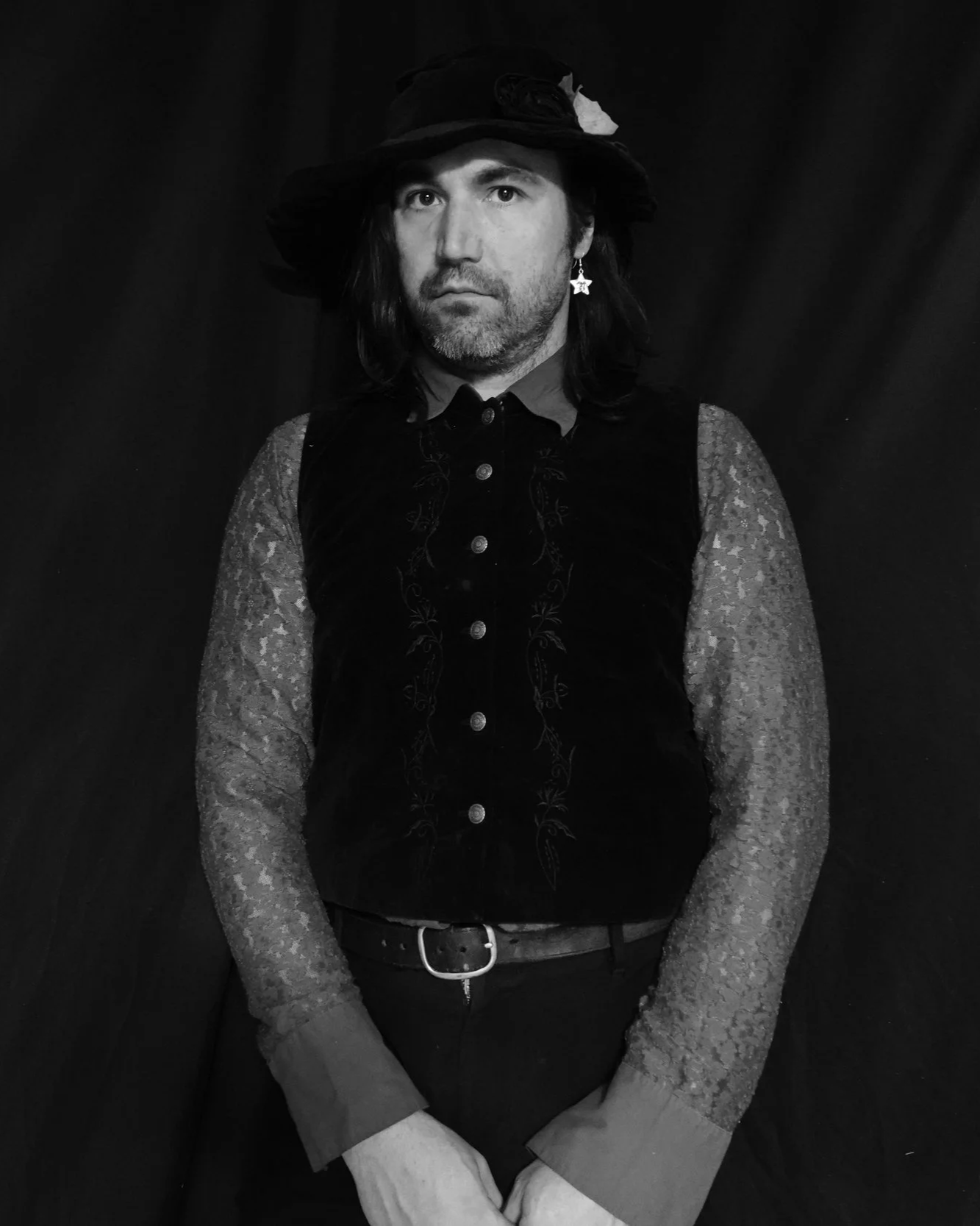
At the heart of Lars Paulson’s artistic life is a near-spiritual veneration for commitment—both the discipline it demands and the transformation it makes possible. Massachusetts-born and largely self-taught with a worldview shaped by his New Age and Baháʼí. He emerged from an unconventional childhood shaped by freedom, improvisation, and self-instruction. Raised among an expansive extended family in a home where “no one really knew they were supposed to be watching me,” Paulson grew up teaching himself how to be productive, how to create order from instinct, and how to translate curiosity into skill. What began as an irreverent childhood evolved into a deep internal drive to build, refine, and execute. Often left to navigate his own interior world, Paulson learned early that beauty existed independently of modern pressures and that meaning was something one built rather than inherited. This self-directed formation remains central to his work: a rejection of self-idolization, cynicism, and the consumerist rhythms that delimit most contemporary life.
Paulson is largely self-taught, having never considered art school and unwilling to abandon the other parts of his working life to pursue a single path. Instead, he refined his technical fluency through his family’s long-standing stained-glass trade, mastering assembly and glass preparation under the mentorship of his grandfather, father, and uncle. Over time, he forged a visual language entirely his own. His practice integrates traditional glass painting with text, screenprinting, and fossil vitra—the process of fusing foraged plant matter into sheets of glass. Toys, discarded wood, and objects discovered in the fields behind his home become components in dynamic compositions that blur the line between craft, artifact, and emotional technology—all becoming vessels for meaning, imbued with sincerity and a rejection of creative nihilism.
For Paulson, art is not a performance of aesthetic pleasure, but a means of interception—a force capable of shifting a life’s direction. As a young man immersed in goth and alternative music subcultures, environments that initially instilled in him a worldview dominated by divisiveness and disdain for convention. He now regards that period with clear-eyed distance, quoting Soundgarden’s line, “Vanity of vanities, it’s all just a vain parade,” as a reminder of the emptiness of self-idolization. This understanding drives the thematic architecture of his work today: a steadfast refusal to participate in cultural pessimism and an insistence on radical sincerity and how cynicism can masquerade as identity.
At the center of his philosophy is a profound veneration for commitment. Paulson has witnessed across creative spheres how many people resist reality in favor of fantasy, abandoning the discipline required for progress. By contrast, he revels in the rare thrill of collaborating with individuals who hold genuine vision—and in the challenge of convincing them they are capable of executing it. Inspired by everything from monumental stained-glass installations in historic chapels to life-altering musical compositions, Paulson believes art can intercept a person’s trajectory and redirect it entirely.
His aspiration is not that viewers simply enjoy his work; pleasure is incidental. Instead, he hopes to provoke a reckoning—a moment where someone feels pierced, awakened. “I don’t want them to just have a good time,” he explains. “I want them to weep, to ask themselves, ‘What am I doing here?’ and then go home and start working.”
In merging inherited craftsmanship with spiritualistic discipline, Paulson constructs stained-glass works that function as both material objects and emotional catalysts. His practice is an ongoing meditation on perspective, sincerity, and the lifelong task of learning to commit—first to oneself, then to the world one hopes to build. His stained-glass practice is an ever-evolving meditation on perspective, sincerity, and the capacity for art to reorder a life. With each work, he aims not to decorate the world, but to intervene in it—to offer viewers a moment of reckoning, revelation, and renewed commitment to their own path.